
Buying a plot in Ramnagar feels exciting, understandably. You’re picturing the house already, the view, the garden, maybe the driveway. But here’s the thing nobody tells you until it’s too late: the plot you choose shapes almost everything that comes after, your foundation costs, your approval timeline, even whether you can build what you actually want. Get this decision wrong and you’re not just stuck with a bad view, you’re stuck with problems that show up years into construction, sometimes years into living there.
This guide walks through what actually matters before you sign anything, legal checks, soil conditions, location factors, and the mistakes that trip up even careful buyers. Ramnagar’s growing fast, which means more plots on the market, but also more sellers who aren’t always upfront about what you’re actually buying.
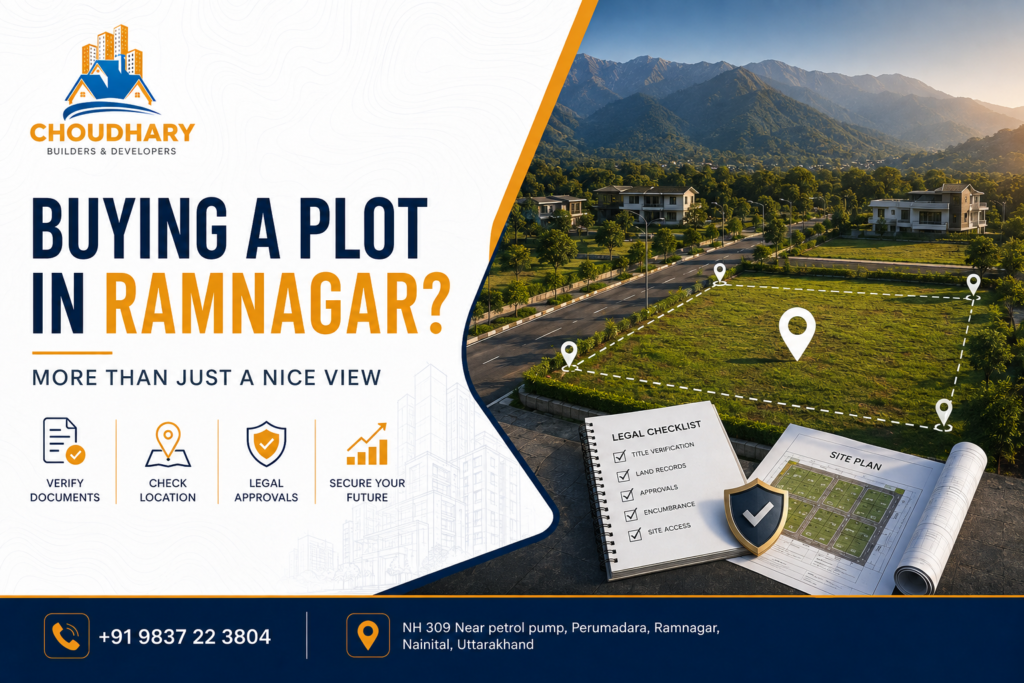
Why Buying a Plot in Ramnagar Requires More Than Just Picking a Nice View
A lot of buyers treat plot selection like picking a hotel room. Nice view, good, done. But land here isn’t uniform. Soil varies block by block sometimes, terrain slopes differently depending on which side of a road you’re on, and proximity to Jim Corbett’s forest boundary can quietly restrict what you’re even allowed to build.
Buying a plot in Ramnagar means thinking beyond aesthetics from day one. The plot that looks perfect on a weekend visit might come with drainage issues that only show up during monsoon, or ownership documentation that’s murkier than the seller’s letting on.
A few reasons this deserves real attention, not a quick decision:
- Foundation costs can swing significantly based on soil and slope, sometimes more than people expect
- Legal disputes over land, once you’re already invested, are expensive and slow to resolve
- Eco-sensitive zone restrictions near Jim Corbett can limit height, footprint, or even what type of structure is permitted at all
- Poor drainage or unstable soil discovered after purchase is far more costly to work around than to avoid upfront
Legal Checks Before Buying a Plot in Ramnagar
This is the part buyers rush most, and it’s the part that causes the most regret later. Before any money changes hands, a few documents and checks are non-negotiable.
Title deed verification. Confirm the seller actually has clear, undisputed ownership. A local lawyer or a title search through the relevant land records office can confirm this properly, don’t just take the seller’s word for it.
Land use classification. Confirm the plot is actually zoned for residential construction, not agricultural or some other classification that would need conversion before you could legally build.
Encumbrance certificate. This confirms the land isn’t tied up in any existing loan, mortgage, or legal dispute. Skipping this is one of the most common ways buyers end up in complicated legal situations after purchase.
Survey and boundary confirmation. Get an actual surveyed boundary check rather than relying on the seller’s description of where the property lines fall. Boundary disputes with neighbors are far more common than people expect, especially on older, informally divided plots.
Approval history. If any part of the land has previously been part of a larger parcel that was subdivided, confirm that subdivision itself was done through proper legal channels, not informally.
Working with a local lawyer who’s handled Ramnagar land transactions specifically tends to catch issues that a general practitioner from outside the region might miss.
Soil and Terrain Considerations When Buying a Plot in Ramnagar
Ramnagar’s proximity to the Kumaon hills means soil and terrain vary a lot more than in a flat city plot. This directly affects your construction costs down the line, so it’s worth understanding before you commit.
- Slope direction and severity. A gentle slope is manageable and can even work in your favor for drainage. A steep slope means significantly more site preparation and foundation work.
- Soil composition. Rocky, sandy, or loose soil each require different foundation approaches. A quick soil test before purchase, not after, tells you what you’re actually working with.
- Drainage patterns. How water moves across and around the plot during heavy monsoon rainfall matters enormously here. A plot that looks fine in dry season can flood or erode significantly during peak rains.
- Proximity to water bodies or riverbeds. Land too close to seasonal water flows can carry flooding risk that isn’t obvious during a dry-season visit.
If you’re not sure how to evaluate this yourself, bringing a structural engineer or experienced local contractor along during a plot visit is worth the small upfront cost. It’s a lot cheaper than discovering a soil problem after you’ve already built a foundation.
Location Factors That Matter When Buying a Plot in Ramnagar
Beyond soil and legal status, where the plot actually sits changes a lot about your day-to-day life once you’ve built there.
- Road access and width. Narrow or poorly maintained access roads can complicate construction logistics and daily commuting alike.
- Distance to essential utilities. Confirm whether electricity, water, and sewage connections are already available nearby, or whether you’d need to arrange and fund extensions yourself.
- Proximity to schools, markets, and healthcare. Especially relevant if you’re building a family home rather than a vacation property.
- Development plans nearby. Ask around about any planned roads, commercial developments, or infrastructure projects that might affect the area’s character or your property’s value over time.
Eco-Sensitive Zone Restrictions Near Jim Corbett
This is a Ramnagar-specific consideration that catches a lot of buyers off guard, especially those coming from outside the region. Plots closer to Jim Corbett’s forest boundary often fall under eco-sensitive zone regulations, which can restrict building height, total footprint, and sometimes even the type of construction permitted.
Before buying, confirm with local municipal authorities whether the specific plot falls within any such zone, and if so, exactly what restrictions apply. This isn’t something to assume based on general proximity, actual zone boundaries can be more specific than they appear on a map, and building without proper clearance can lead to serious complications down the line.
Common Mistakes People Make When Buying a Plot in Ramnagar
A few patterns show up again and again among buyers who end up regretting their purchase.
Skipping the soil test. Buyers get excited about a view or a price and skip verifying what’s actually underneath the land they’re buying.
Not verifying legal documentation thoroughly. Trusting a seller’s word over an actual title search and encumbrance check is one of the costliest shortcuts a buyer can take.
Ignoring monsoon-season conditions. Visiting a plot only during dry season means missing drainage and flooding issues that only reveal themselves during heavy rain.
Assuming all plots near Jim Corbett have the same restrictions. Eco-sensitive zone boundaries vary by specific location, not by general proximity, and assuming otherwise can derail construction plans later.
Not budgeting for site preparation. Sloped or rocky plots often need significant grading, retaining structures, or extra foundation work that buyers frequently underestimate at purchase time.
Plot Orientation and Vastu Considerations
Beyond the practical checks, a lot of families buying a plot in Ramnagar also want to factor in Vastu principles before committing to a purchase, since orientation is something you genuinely can’t change once a plot is bought and a home is built on it.
North or east-facing plots are traditionally considered favorable for the main entrance, though hillside plots don’t always offer that flexibility given natural slope and road access constraints. If Vastu compliance matters to your family, it’s worth reviewing orientation, shape, and slope direction with a consultant before purchase rather than trying to work around a fixed layout afterward. Our guide on Vastu-compliant home construction in Ramnagar covers this in more depth if it’s part of your planning.
Shape matters too, beyond just orientation. Regular, rectangular plots are generally easier and more cost-effective to build on than irregular shapes, since odd angles often mean wasted space or awkward structural workarounds during design.
Questions to Ask Before Buying a Plot in Ramnagar
A few direct questions to the seller, or to a local professional, can save considerable trouble later.
- Can you provide clear title documentation and an encumbrance certificate?
- Has this land ever been part of a legal dispute or ownership disagreement?
- What’s the actual zoning classification, and is it approved for residential construction?
- Does this plot fall within any eco-sensitive zone restrictions given its proximity to Jim Corbett?
- What’s the drainage like during monsoon season specifically?
- Are electricity, water, and sewage connections already available, or would they need to be arranged separately?
FAQs About Buying a Plot in Ramnagar
1. What’s the most important check before buying a plot in Ramnagar?
Legal title verification, confirming clear, undisputed ownership through proper documentation, is generally the single most important check, since legal disputes after purchase are expensive and slow to resolve.
2. How do I know if a plot falls under eco-sensitive zone restrictions?
Check directly with local municipal authorities rather than assuming based on general distance from Jim Corbett. Zone boundaries can be more specific than they appear from a casual visit.
3. Should I get a soil test before or after buying the plot?
Before, always. A soil test after purchase only tells you what you’re dealing with, it doesn’t give you the option to walk away if the conditions are genuinely poor.
4. Is it worth visiting a plot during monsoon season before buying?
Yes, if at all possible. Drainage and flooding issues that aren’t visible in dry season can significantly affect both construction and long-term livability.
5. What documents should I request from the seller?
At minimum, title deed, encumbrance certificate, land use classification, and confirmation of any prior subdivision history if the land was once part of a larger parcel.
6. Can Choudhary Builders help evaluate a plot before I purchase it?
Yes. Choudhary Builders can assess soil conditions, terrain, and general construction feasibility for a plot you’re considering, which helps you make a more informed decision before signing anything.
7. How much does terrain actually affect construction costs?
Significantly, in some cases. Sloped or rocky plots often require additional site preparation, retaining structures, and foundation work that flatter plots don’t need, so it’s worth factoring into your budget from the start.
8. What’s the biggest red flag when evaluating a plot?
Reluctance from the seller to provide clear documentation, or vague answers about legal status and boundaries. Genuine sellers are usually upfront and cooperative about verification.
Final Thoughts on Buying a Plot in Ramnagar
Buying a plot in Ramnagar is the first real decision in your entire construction journey, and it shapes far more than people expect going in. Legal clarity, soil conditions, location, and zone restrictions all deserve real attention before you sign anything, not just a quick weekend visit and a good feeling about the view.
Take your time with this decision. A plot that seems perfect on the surface can carry hidden costs or complications that only surface once you’re already committed. Bringing in a lawyer for legal checks and a contractor or engineer for site evaluation before purchase is genuinely worth the small upfront investment.
If you’re currently evaluating a plot in Ramnagar and want an honest assessment of its construction feasibility, reach out to Choudhary Builders. Their team can help you understand what you’re actually buying before you commit, so your dream home starts on solid ground, literally.