
Your house is finally built. Keys handed over, paint dry, maybe you’ve already moved the furniture in. Post-construction home maintenance is probably the last thing on your mind right now, and that’s exactly the problem. Most homeowners treat the day construction ends as the finish line, when really it’s just the start of a completely different phase, one that determines whether your home holds up for decades or starts showing problems within a couple of years.
This guide walks through what actually needs attention once you’re living in the home, seasonal upkeep, structural checks, waterproofing, and the small habits that prevent big repair bills later. Ramnagar’s climate, heavy monsoon, humid stretches, cooler winters, makes post-construction home maintenance here a bit different from a flat, dry city home, so a generic checklist won’t quite cut it.
Why Post-Construction Home Maintenance in Ramnagar Matters More Than You’d Think
Here’s the thing nobody really tells new homeowners: even a well-built home needs consistent upkeep. Materials settle, weather takes its toll, small issues that go unnoticed slowly turn into expensive ones. Skipping maintenance doesn’t save money, it just delays the cost and usually makes it bigger.
Ramnagar specifically throws a few extra variables into the mix. Heavy monsoon rainfall stresses waterproofing and drainage every single year. Humidity during certain months accelerates wear on wood and metal fittings. And proximity to the hills means soil movement and settling can behave differently than it would on flatter terrain.
A few reasons this deserves real attention, not an occasional glance:
- Small cracks left unaddressed can widen and lead to genuine structural concerns over time
- Water damage from unnoticed leaks tends to spread quietly before it becomes visible
- Electrical and plumbing systems degrade faster without periodic checks, sometimes silently
- Regular maintenance protects resale value, since a well-kept home holds its worth far better than a neglected one
Seasonal Maintenance: What Changes Through the Year
Ramnagar’s seasons genuinely shift what your home needs, so a fixed, year-round checklist doesn’t quite work. Breaking it down by season makes it a lot more manageable.
Pre-monsoon (typically March to May). This is when you get ahead of the rain, not after it starts. Check roof and terrace waterproofing, clear gutters and drains of debris, and inspect exterior walls for any hairline cracks that could let water in once the rains hit.
Monsoon (June to September). Regular checks matter more here than any other season. Watch for damp patches, peeling paint, or any water pooling near the foundation. Small leaks caught early are a quick fix. Ignored ones become a much bigger problem by the time monsoon ends.
Post-monsoon (October to November). Once the rains stop, do a full walkthrough. Check for any dampness that’s settled into walls, inspect for mold in poorly ventilated areas, and touch up any exterior paint that took a beating over the season.
Winter (December to February). Cooler, drier months are actually the best time for structural inspections and any repair work you’ve been putting off, since conditions are stable and materials cure properly without monsoon interference.
Monsoon Prep for Post-Construction Home Maintenance in Ramnagar
Given how much rain this region sees, monsoon prep genuinely deserves its own focus, not just a line item in a general checklist.
- Inspect and clean gutters and downpipes before the season starts, blocked drainage is one of the most common causes of water damage in homes here
- Check terrace and roof waterproofing for any wear, especially around joints and edges where leaks typically start
- Look at exterior wall paint and plaster for cracks, since even hairline gaps can let water seep in over weeks of continuous rain
- Test that ground-level drainage actually directs water away from the foundation rather than pooling against it
If waterproofing was part of your original construction, our guide on waterproofing solutions for your home covers what a proper system should include and how to spot early signs it needs attention.
Structural Health Checks You Shouldn’t Skip
Structural issues rarely show up overnight. They build slowly, which is exactly why periodic checks matter, catching something early is a minor fix, catching it late is a major one.
A few things worth checking every so often:
- Wall and ceiling cracks. Hairline cracks are usually cosmetic, but wider or spreading cracks deserve a proper structural assessment, not just a coat of paint over them
- Foundation settling. Uneven floors or doors and windows that suddenly don’t close properly can be early signs worth investigating
- Roof and terrace condition. Look for any sagging, pooling water, or deteriorating waterproofing membrane
- Support beams and columns, especially in older sections of a home if you’ve done any renovation or extension work
If you’re ever unsure whether something’s cosmetic or structural, it’s worth getting a professional opinion rather than guessing. Our guide on earthquake-resistant home construction in Ramnagar also covers structural fundamentals that are useful context even after a home’s already built.
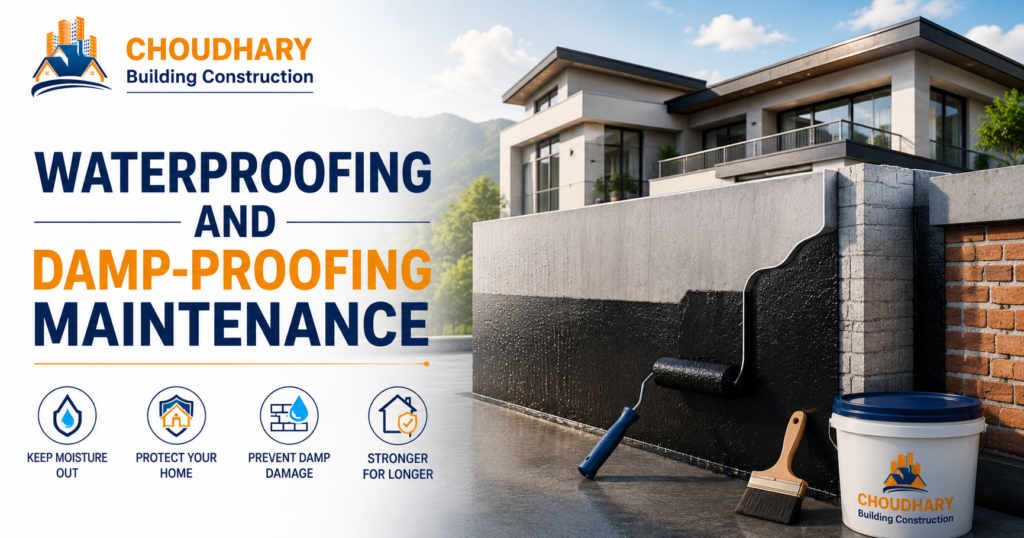
Waterproofing and Damp-Proofing Maintenance
Waterproofing isn’t a one-time job that lasts forever, it degrades gradually, especially under repeated monsoon exposure. A few maintenance habits keep it functioning as intended:
- Reapply waterproofing coatings on terraces and exposed surfaces every few years, depending on material and exposure
- Check bathroom and kitchen waterproofing periodically, since these areas see constant water exposure and are common places for slow leaks to start
- Address any damp patches immediately rather than just repainting over them, since paint alone doesn’t fix an underlying moisture problem
- Ensure proper ventilation in bathrooms and kitchens to prevent trapped humidity from damaging walls and fittings over time
Electrical and Plumbing Upkeep
These systems tend to get ignored until something actually breaks, but periodic checks catch small issues before they become inconvenient, or worse, unsafe.
- Have wiring inspected periodically, especially if you notice flickering lights, warm switches, or tripped breakers more often than usual
- Check plumbing joints and fittings for slow leaks, which often go unnoticed until water damage shows up somewhere unexpected
- Test water pressure and drainage speed occasionally, since gradual changes can indicate a developing blockage or pipe issue
- Service water heaters and pumps on a regular schedule rather than waiting for them to fail
Common Mistakes Homeowners Make With Post-Construction Home Maintenance
A few patterns show up again and again among homeowners who end up facing bigger repair bills than necessary.
Waiting until something visibly breaks. Most maintenance is far cheaper as prevention than as a repair after the fact. Waiting for visible damage usually means the problem’s already bigger than it needed to be.
Repainting over damp patches instead of fixing the source. This hides the symptom temporarily but does nothing for the actual moisture problem underneath, which tends to resurface within a season or two.
Skipping pre-monsoon prep entirely. Homeowners who wait until the rain has already started to check gutters and waterproofing are almost always playing catch-up instead of staying ahead of it.
Ignoring small cracks because they seem cosmetic. Not every crack is structural, but assuming that without actually checking is how minor issues sometimes turn into major ones.
Not keeping any maintenance record. Without a rough log of what’s been checked or repaired and when, it’s easy to lose track of what actually needs attention next.
A Simple Maintenance Checklist for Ramnagar Homes
A basic, repeatable checklist makes this whole process a lot less overwhelming.
- Clean gutters and check drainage before monsoon season begins
- Inspect terrace and roof waterproofing at least once a year
- Walk through the home after monsoon ends, checking for dampness or mold
- Check wiring and plumbing fixtures periodically, not just when something stops working
- Touch up exterior paint and plaster as soon as cracks or wear appear
- Get a structural check every few years, or sooner if you notice anything unusual
FAQs About Post-Construction Home Maintenance in Ramnagar
1. How often should I check my home’s waterproofing?
At minimum, once a year before monsoon season, though homes with older or heavily exposed waterproofing may need more frequent checks.
2. What’s the most common maintenance mistake homeowners make?
Waiting until a problem is visible before addressing it. Most maintenance issues are far cheaper and easier to fix when caught early.
3. How do I know if a crack is structural or just cosmetic?
Thin, stable hairline cracks are usually cosmetic. Wider cracks, ones that seem to be growing, or cracks appearing near doors and windows are worth a professional structural assessment.
4. Is post-construction maintenance different in Ramnagar compared to other cities?
Yes, largely due to heavy monsoon exposure and humidity, both of which stress waterproofing, wood, and metal fittings more than they would in a drier climate.
5. How often should electrical wiring be inspected?
Every few years is a reasonable baseline, though any flickering lights, warm switches, or frequent tripped breakers should prompt an inspection sooner.
6. Does Choudhary Builders offer maintenance support after construction is complete?
Yes. Choudhary Builders can assess structural health, waterproofing condition, and general maintenance needs for homes we’ve built, as well as provide guidance for homes built by others.
7. What’s the best time of year to do structural repairs?
Winter months, typically December through February, tend to be ideal, since drier, stable conditions allow materials to cure properly without monsoon interference.
8. How much does neglecting maintenance actually cost in the long run?
It varies by issue, but delayed maintenance consistently costs more than proactive upkeep, since small problems compound into structural or water damage repairs that are considerably more expensive to fix.
Final Thoughts on Post-Construction Home Maintenance
Post-construction home maintenance isn’t glamorous, and it’s easy to put off when everything looks fine on the surface. But the homes that hold up best over decades are almost always the ones where small issues got caught early, not the ones that were simply built well and then ignored. Making post-construction home maintenance a regular habit, not an afterthought, is what actually protects your investment long term.
Build a simple seasonal habit around checking your home, gutters and waterproofing before monsoon, a full walkthrough after, periodic checks on wiring and plumbing throughout the year. It’s a small time investment that protects a much bigger one.
If you’re noticing signs of wear, dampness, or structural concerns in your home, or just want a professional assessment to stay ahead of potential issues, reach out to Choudhary Builders. Their team can help you understand what your home actually needs, whether we built it or not.