
Choosing an interior design trends and materials guide that actually fits your home, rather than just copying whatever’s popular on social media, makes a genuine difference in how your space looks and feels for years to come. A lot of homeowners in Ramnagar focus so heavily on structural construction, foundation, walls, roofing, that interiors become an afterthought, something to figure out once the “real” building work is done. That’s a mistake. Interior choices affect daily comfort, long-term maintenance, and even resale value just as much as structural decisions do.
This guide walks through what’s actually working in interior design right now, which materials hold up well in Ramnagar’s specific climate, and where homeowners tend to overspend or underplan. Whether you’re finishing a new build or refreshing an existing home, this interior design trends and materials guide should give you a genuinely practical starting point.
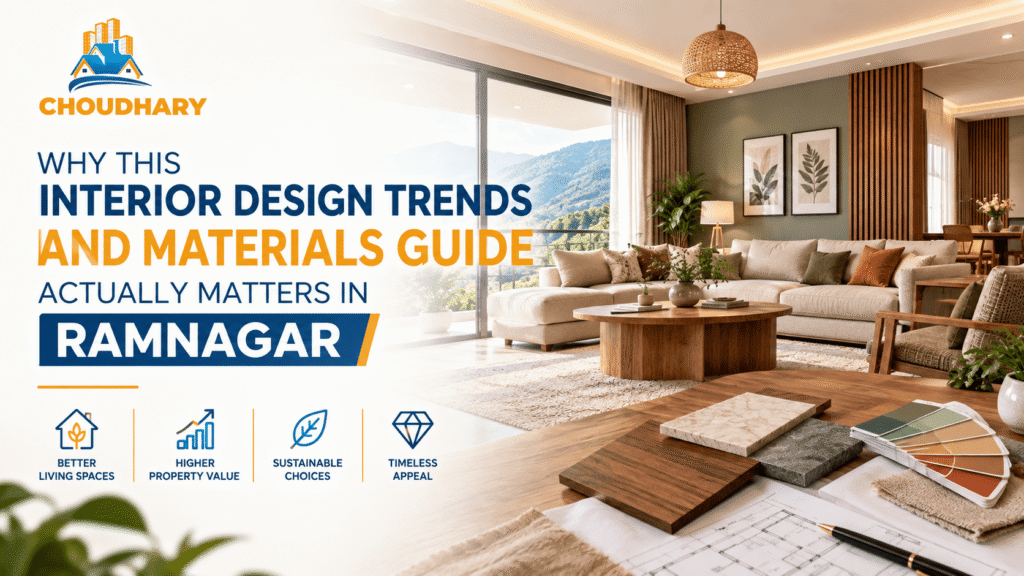
Why This Interior Design Trends and Materials Guide Actually Matters in Ramnagar
Ramnagar’s climate, humid monsoon months, cooler winters, general proximity to hilly terrain, changes what “good” interior material choices actually look like here compared to a flat, dry city. A trend that works beautifully in a controlled, air-conditioned apartment in a metro city might not hold up the same way in a home exposed to seasonal humidity swings.
A few reasons this deserves real thought, not just a quick Pinterest scroll:
- Humidity and monsoon exposure affect how certain materials, particularly wood and some fabrics, age over time
- Natural light patterns here differ from flat urban plots, which changes how color and lighting choices actually read in a space
- Interior choices directly affect long-term maintenance costs, some materials look great initially but demand constant upkeep
- Resale value increasingly factors in interior quality, not just square footage and structural soundness
Flooring: Where Interior Design Trends and Materials Choices Matter Most
Flooring is one of the most consequential interior decisions, both for appearance and practicality, since it affects the entire feel of a home and takes real daily wear.
Vitrified tiles. Currently one of the most popular choices for good reason, durable, low-maintenance, and available in finishes that mimic natural stone or wood without the associated upkeep. A strong all-around choice for most rooms in a Ramnagar home.
Natural stone (marble, granite). Elegant and long-lasting, though it requires more maintenance, particularly sealing against moisture, given the region’s humidity. Best suited for areas with lower foot traffic or where the maintenance commitment genuinely makes sense.
Engineered wood flooring. A popular trend for bedrooms and living spaces, offering warmth and aesthetic appeal, though genuine hardwood can struggle with humidity swings here more than engineered alternatives, which are built to handle moisture better.
Textured and matte-finish tiles. A growing trend away from the glossy tile look of a decade ago, matte and textured finishes read as more contemporary and also tend to show less wear and fewer visible scratches over time.
Wall Finishes and Paint Trends
Walls set the tone for an entire room, and current trends have moved noticeably away from stark, single-color walls toward more layered, textured approaches.
- Textured paint finishes are increasingly popular for accent walls, adding depth without needing elaborate wallpaper or paneling
- Earthy, muted tones (terracotta, sage, warm beige) are replacing the starker whites and greys that dominated interior trends a few years back
- Exposed brick or stone accent walls, when done well, add genuine character, particularly in living spaces, and work well with both modern and more traditional home styles
- Moisture-resistant paint formulations matter more here than in drier climates, and are worth specifically asking for given how much monsoon exposure affects interior walls over time
Lighting Trends That Actually Make a Difference
Lighting is often underestimated, but it genuinely transforms how a space feels and functions, sometimes more than the furniture or wall color itself.
- Layered lighting, combining ambient, task, and accent lighting rather than relying on a single central fixture, creates a noticeably more comfortable, adaptable space
- Warm-toned LED lighting has become the standard over harsher, cooler-toned bulbs, since warm tones tend to feel more inviting in residential spaces
- Statement fixtures in key areas, a distinctive pendant light over a dining table, for instance, add personality without requiring a full design overhaul
- Maximizing natural light through window placement and interior layout remains one of the most cost-effective ways to improve how a home feels day to day, and it’s worth planning for at the design stage rather than trying to compensate for afterward
Kitchen and Bathroom Interior Trends
These two rooms tend to see the heaviest daily use and the most water exposure, so material choices here carry more weight than almost anywhere else in the home.
Modular kitchen layouts with efficient storage solutions remain a strong, consistent trend, since they maximize functionality in whatever space is available, whether that’s a compact kitchen or a larger open-plan layout.
Quartz countertops have grown in popularity over traditional granite, offering similar durability with less maintenance and a wider range of consistent finishes.
Anti-skid, water-resistant flooring in bathrooms isn’t just a trend, it’s practically essential given how much water exposure these spaces see, and it’s an area worth prioritizing quality over cutting costs.
Well-ventilated bathroom design matters enormously in a humid climate specifically, since poor ventilation accelerates mold and material degradation far faster here than in drier regions. If waterproofing is part of your renovation planning, our waterproofing solutions guide covers what a proper system should include.
Furniture and Layout Trends for Small and Large Homes
Furniture choices and spatial layout work together, and current trends increasingly favor flexibility over rigid, single-purpose room design.
- Multi-functional furniture (storage beds, extendable dining tables, modular sofas) is especially valuable in smaller homes where every square foot needs to work harder
- Open-plan living and dining spaces continue to dominate newer builds, creating a more social, connected feel compared to older, more compartmentalized layouts
- Built-in storage solutions reduce clutter and free up floor space, particularly valuable in homes with smaller footprints
- A mix of natural and manufactured materials (wood alongside metal or glass accents) tends to feel more current than an interior built entirely from one material family
Sustainable and Low-Maintenance Material Choices
Sustainability has moved from a niche preference to a genuine mainstream consideration in interior material selection, and for good reason, it often overlaps directly with lower long-term maintenance too.
- Low-VOC paints improve indoor air quality and have become increasingly available without a significant price premium over standard options
- Bamboo and reclaimed wood accents offer a sustainable alternative to traditional hardwood, with genuine aesthetic appeal
- Water-efficient bathroom fittings reduce both environmental impact and utility costs over time
- Durable, low-maintenance surface materials reduce the need for frequent replacement or repair, which matters both for sustainability and for genuine long-term cost savings
Common Mistakes When Following Interior Design Trends and Materials Advice
A few patterns show up repeatedly among homeowners who end up unhappy with interior choices a few years down the line.
Choosing trends without considering local climate. A material that looks stunning in a design magazine shot elsewhere might not hold up the same way against Ramnagar’s humidity and monsoon exposure.
Prioritizing appearance over maintenance reality. Some beautiful materials demand more upkeep than homeowners realistically want to commit to, which leads to a home that looks worn faster than it should.
Underestimating lighting’s impact. Furniture and paint colors get most of the attention, while lighting, which genuinely transforms how a space feels, often gets an afterthought budget.
Not planning interiors alongside structural design. Waiting until construction is nearly complete to think seriously about interiors often means missing opportunities, built-in storage, optimal window placement, electrical points for specific lighting plans, that are far easier to plan for upfront.
Mixing too many trends at once. A home that tries to incorporate every current trend simultaneously often ends up feeling disjointed rather than cohesive. Picking a consistent direction tends to age better than chasing every trend individually.
Questions to Ask Your Interior Designer or Contractor
Following an interior design trends and materials guide only gets you so far without the right professional input. A few direct questions help ensure your interior choices are genuinely suited to your home and this region’s climate, not just generically trendy.
- Which materials do you specifically recommend for humidity and monsoon resistance in this region?
- How do you balance current design trends with genuine long-term durability?
- Can you help plan interior elements (lighting points, built-in storage) alongside the structural design rather than after?
- What maintenance can I realistically expect from the materials you’re recommending?
- Do you have examples of completed interiors in similar homes I could see in person?
FAQs About This Interior Design Trends and Materials Guide
1. What flooring material works best for Ramnagar’s climate specifically?
Vitrified tiles are generally the most practical all-around choice, offering durability and low maintenance without the moisture sensitivity that natural wood or unsealed stone can struggle with in humid conditions.
2. Are natural wood floors a bad choice given the monsoon climate here?
Not necessarily bad, but they require more careful maintenance and moisture management than engineered wood alternatives, which are generally a safer choice for this specific climate.
3. How much should lighting actually factor into an interior design budget?
More than most homeowners initially plan for. Layered, well-planned lighting genuinely transforms how a space feels, and it’s one of the more cost-effective ways to improve a home’s atmosphere relative to furniture or major material changes.
4. What’s the most common interior design mistake homeowners make?
Choosing materials and trends without considering local climate suitability, particularly humidity and monsoon exposure, which affects how certain materials age here compared to drier regions.
5. Should interior planning happen before or after structural construction is finalized?
Ideally alongside it. Planning interior elements like built-in storage, lighting points, and layout early avoids costly retrofitting later and generally produces a more cohesive result.
6. Are sustainable interior materials significantly more expensive?
Not always. Many sustainable options, like low-VOC paints, are now priced comparably to standard alternatives, and the long-term maintenance savings often offset any initial premium.
7. Does Choudhary Builders help with interior design as part of renovation projects?
Yes. Choudhary Builders factors interior material and design considerations into renovation projects, helping clients choose finishes that balance current trends with genuine durability for this region’s climate.
8. What’s a good starting point if I’m overwhelmed by interior design choices?
Start with flooring and lighting, since these two decisions affect the entire feel of a home more than almost any other choice in this interior design trends and materials guide, then build color and furniture decisions around them rather than the other way around.
Final Thoughts on Interior Design Trends and Materials
This interior design trends and materials guide comes down to one core idea: a genuinely well-designed interior isn’t about chasing every trend at once, it’s about choosing materials and finishes that suit both your taste and Ramnagar’s specific climate, then executing that choice consistently throughout the home. Flooring, wall finishes, lighting, and material sustainability all deserve real thought, not just a quick decision made under time pressure near the end of a construction project.
If you’re planning a renovation or want interior guidance that accounts for this region’s climate specifically, our home renovation guide in Ramnagar covers the broader planning process, while our construction materials guide goes deeper into structural material choices that often intersect with interior decisions.
Reach out to Choudhary Builders if you want a team that treats interior planning as seriously as structural construction, so your home looks as good in five years as it does on the day you move in.