
Knowing the right questions to ask a home builder before signing a contract can save you from a lot of stress later, because building a home is genuinely one of the biggest decisions most people make in their lifetime. Unlike buying furniture or upgrading your interiors, building a house involves your savings, long-term plans, family expectations, and years of hard work, which is exactly why choosing the right builder isn’t simply about comparing prices or picking the first company you find online.
Many homeowners spend weeks deciding on designs, layouts, and materials, but end up overlooking something just as important: asking the right questions before signing the contract. A construction agreement is more than paperwork. It becomes the foundation of your entire project, shaping the timeline, budget, expectations, responsibilities, and overall building experience.
Whether you’re planning your first home, investing in a second property, or building your dream house from scratch, taking the time to ask the right questions upfront can help you avoid a lot of confusion later. If you’re preparing to start your construction journey, here are some of the most important questions to ask a home builder before signing a contract.
Why Asking Questions Before Signing Matters
Most construction challenges don’t actually begin during construction, they begin before construction even starts. Misunderstandings around timelines, hidden costs, project scope, changes, and communication usually happen because expectations were never discussed clearly in the first place. A good contract should create clarity for both sides, not confusion.
Asking detailed questions doesn’t mean you distrust your builder. It simply shows that you’re approaching a major investment carefully. A professional builder will usually appreciate working with informed clients too, since clear communication almost always leads to smoother projects for everyone involved. That’s exactly why having a clear list of questions to ask a home builder before signing matters so much.
1. What Exactly Is Included in the Construction Cost?
Price is usually the first thing people discuss, but it’s often not discussed in enough detail. When you’re reviewing a quotation, ask the builder to clearly explain what’s included and what’s excluded, since people often assume certain features are covered and only discover the extra costs later. It’s worth asking:
- Does the pricing include both labour and materials?
- Are approvals included in the quoted cost?
- Does it cover electrical and plumbing work?
- Are finishing materials included?
- Is landscaping part of the package?
Understanding the scope clearly at this stage helps you avoid unexpected costs further down the line.
2. What Type of Construction Services Do You Handle?
Different builders operate in different ways. Some offer complete end-to-end construction support, while others only handle the execution part of the project. Understanding which model you’re working with helps set the right expectations from the start. It’s worth knowing whether the builder supports the planning phase, coordinates with architects, manages site supervision, and provides regular project updates. Knowing exactly who handles what makes project management a lot smoother for everyone.
3. Can You Show Examples of Similar Projects?
Every builder has their own working style, so before signing anything, ask to see completed projects that resemble what you’re planning. Looking at their previous work gives you a much more realistic sense of their design quality, construction standards, space planning, material finishing, and overall attention to detail, far more useful than just scrolling through polished promotional photos.
4. What Is the Estimated Construction Timeline?
Timelines are one of the most overlooked parts of home construction. While unexpected situations can occasionally affect the schedule, it still helps to understand the builder’s estimated completion timeline upfront. Ask about the expected start date, the planned construction phases, how delays are typically managed, and how often you’ll get progress updates. Having clear expectations from the beginning goes a long way in reducing uncertainty later.
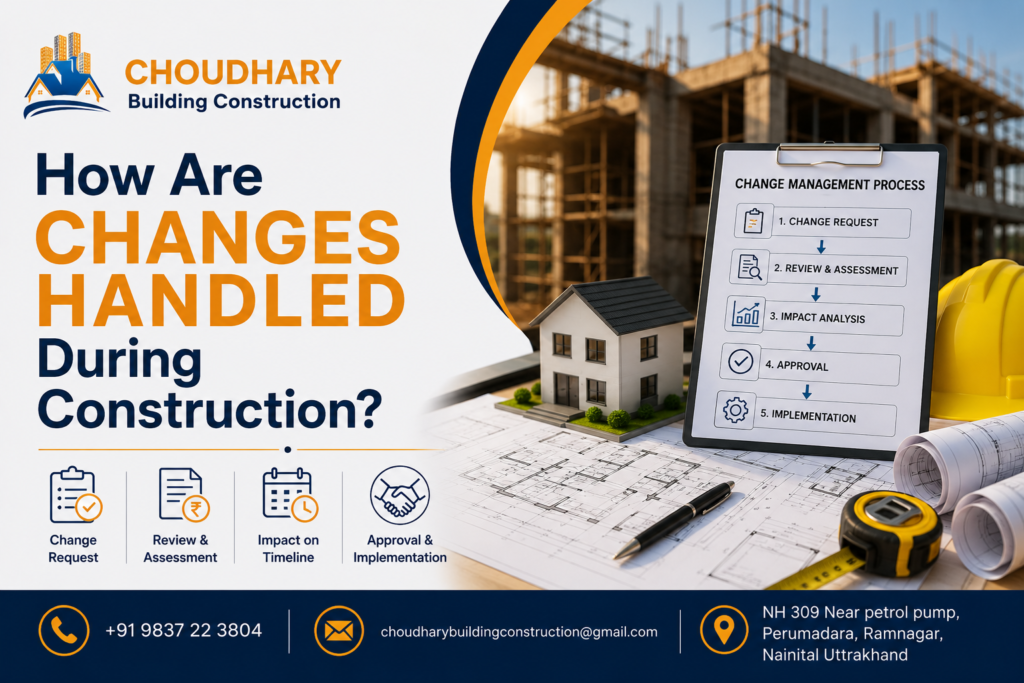
5. How Are Changes Handled During Construction?
It’s common for homeowners to make adjustments after construction has already begun, whether that’s changing the flooring, modifying a layout, adding a room, or updating finishes. These decisions can affect both the cost and the completion schedule, so it’s worth discussing how changes are approved, whether revised estimates will be shared, and how timeline adjustments get communicated. Understanding this process early on helps avoid a lot of confusion later.
6. Who Will Be My Main Point of Contact?
Communication plays a huge role in how smooth your overall construction experience feels. Sometimes clients speak with a sales representative initially but end up working with a completely different team once the project actually starts, so it’s worth asking who manages communication once construction begins. Will there be a dedicated project manager? How often will updates be shared? Will site visits be scheduled? And who do you contact for urgent concerns? Clear communication from day one usually makes the entire experience a lot smoother.
7. What Materials Will Be Used?
Construction quality depends heavily on the materials used. Instead of focusing only on brand names, it’s more useful to ask about the overall quality standards and how material decisions are made. Talk about the structural materials, finishing quality, durability expectations, and what the replacement process looks like if something needs to be fixed later. Understanding these choices helps align your expectations with your actual budget.
8. How Do You Maintain Construction Quality?
Quality control is one of the most important things to discuss before signing anything. Ask the builder about their process for maintaining standards throughout construction, including how often they do site inspections, project supervision, progress reviews, and internal quality checks. A structured, consistent process usually translates into a more consistent build.
9. What Happens If There Is a Delay?
Construction timelines can shift sometimes, and discussing this possibility beforehand helps reduce stress later if it actually happens. Ask how delays are communicated, what happens if the schedule changes, and whether revised timelines get shared with you. Knowing this process upfront creates a lot more transparency throughout the project.
10. How Are Payments Structured?
Payment schedules should feel clear and manageable, not confusing. Instead of focusing only on the total price, ask about how milestone-based payments work. How many payment stages are there? What triggers each one? Will invoices be shared, and what documentation will you receive along the way? Understanding the payment structure upfront makes it much easier to plan your finances.
11. Are Approvals and Documentation Included?
Construction often comes with a fair amount of administrative work behind the scenes. It’s worth asking whether the builder offers support with approvals and the required paperwork, or whether that’s something you’ll need to manage on your own. Understanding who’s responsible for what early on can save you a lot of time later.
12. What Support Is Available After Project Completion?
A lot of homeowners only think as far as the day construction wraps up, but post-project support matters just as much. Talk about final inspections, completion documentation, what kind of post-construction support is available, and how issues can be reported if something comes up later. Knowing what happens after handover gives you a lot more confidence going into the project.
Common Mistakes Homeowners Make Before Signing
Some decisions tend to create avoidable problems down the line. A few common ones include choosing a builder based purely on the lowest price, skipping detailed contract discussions, ignoring how communication will be handled, not reviewing the project scope carefully, and assuming that verbal promises are automatically included in the written agreement. Taking a bit more time at the start almost always leads to a smoother experience overall.
Why Choosing the Right Builder Matters
Building a house isn’t just a construction project. It becomes the place where families grow, memories are made, and long-term plans take shape, which is exactly why choosing a builder should involve a lot more than just comparing quotations. Experience, communication, planning, transparency, and a genuine understanding of the project all play a part in the final outcome. Working with a builder who explains things clearly and actually understands what you’re looking for can make the entire journey far more comfortable.
Why Homeowners Choose Choudhary Builders
Every homeowner has different priorities. Some are focused mainly on design, others care more about timely completion, and many simply want a guided process from planning all the way through execution. At Choudhary Builders, the approach centers on understanding each project’s specific requirements, maintaining clear communication, and supporting homeowners through every stage of the construction journey.
If you’ve been going through this list of questions to ask a home builder and wondering what a good answer actually sounds like, that’s the kind of conversation Choudhary Builders aims to have with every client, focused on creating homes that align with both practical needs and long-term expectations, rather than rushing through a generic process.
Final Thoughts
Signing a construction contract is a big step, but asking thoughtful questions before signing can make the entire process far more transparent and manageable. The right conversations early in the journey usually reduce misunderstandings and help homeowners move forward with a lot more confidence. A well-planned project always starts with clear communication and informed decisions.
Take your time, go through these questions to ask a home builder, and choose a building partner who helps you understand the process, not just the price. If you’re starting your construction journey, get in touch with Choudhary Builders to discuss your project and get the clarity you need before signing anything.
FAQs
1. Why should I ask questions before signing a builder contract?
These are some of the most important questions to ask a home builder, and asking them upfront helps clarify the project scope, timelines, pricing, and responsibilities before you’re legally bound to a contract. It gives you the chance to catch any gaps or assumptions early, when they’re still easy to fix.
2. What should be included in a home construction contract?
A solid contract should clearly explain the project scope, total pricing, payment schedule, estimated timelines, and the terms covering changes, delays, and responsibilities. The more specific these sections are, the fewer surprises you’ll run into later.
3. Is the lowest construction quote always the best option?
Not necessarily. A lower quote can sometimes mean reduced material quality, a narrower project scope, or hidden costs that show up later. It’s usually better to compare quality, communication, and what’s actually included rather than just the bottom-line number.
4. How do I know if a builder is suitable for my project?
Look at their previous projects, how clearly they communicate, and how structured their overall process is. A builder who explains things patiently and has relevant experience with similar projects is usually a good sign.
5. Can construction costs change after signing?
Yes, costs can change if you request modifications, add new features, or if material prices fluctuate during the project. This is exactly why it helps to clarify how changes and their costs are handled before signing the contract.
6. Should I ask about project timelines?
Yes, definitely. Discussing timelines in detail helps set realistic expectations from the start and gives you a clear sense of when different phases of construction will happen.
7. What happens if I want changes during construction?
Most builders have a defined process for reviewing and approving modifications, which usually includes a revised cost estimate and an updated timeline. It’s worth understanding this process in advance so changes don’t catch you off guard.
8. Why is communication important during construction?
Regular communication keeps you updated on progress, helps catch issues early, and generally leads to a much smoother project overall. It also makes it easier to address concerns before they turn into bigger problems.